
ORIAS 60 Second Shopping Spree
Australia Post
How we took a flagging promotion and drove record engagement.
The brief
Each year, Australia Post partners with Online Retailer to present the ORIAS, celebrating excellence in online retail. One of the most important categories is the consumer-driven People’s Choice Awards.
Australia Post approached us with clear targets: increase consumer votes by 20 per cent and merchant registrations by 45 per cent. This is how we exceeded both.
Boosting engagement through novelty
Engagement had declined over the previous years, due to an unchanging prize mechanic. The standard “enter to win a gift voucher” format that had defined previous years had lost its appeal.
To re-energise the competition, we explored ideas rooted in the world of retail. Drawing inspiration from the TV show “Supermarket Sweep”, we proposed a digital shopping spree where one lucky winner would have 60 seconds to spend up to 10,000 dollars. This concept felt bold, memorable and perfectly aligned with the e-commerce space.
Design approach
The game needed to do more than act as a prize hook; it had to function as a strategic marketing tool that reflected the ORIAS brand and gave users a taste of the awards experience.
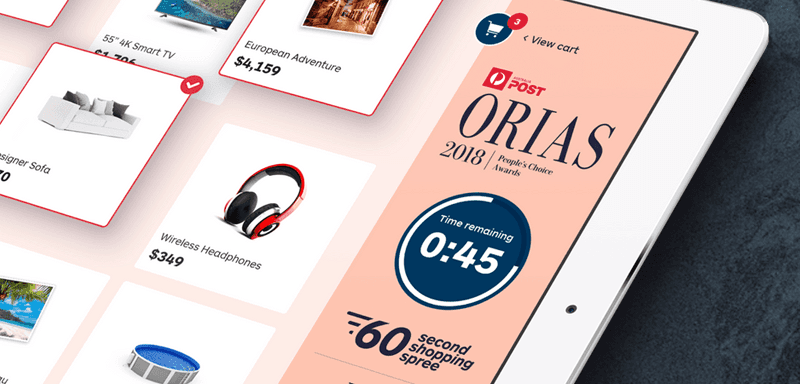
I designed a fast-paced e-commerce simulation in which players added prizes to a cart within a strict 60-second limit. The challenge lay in creating an experience that was challenging enough to be engaging, but not so challenging that it felt impossible to complete without randomly adding products without any consideration. If users could reach the maximum spend too quickly, the experience would fall flat. If it were too difficult, it would feel unfair. The UX work centred on calibrating this balance.
The prototype
To confidently validate the concept, we needed a fully working prototype, not a wireframe walkthrough. Axure RP was the ideal tool due to its richer interaction capabilities, database functions and support for JavaScript.
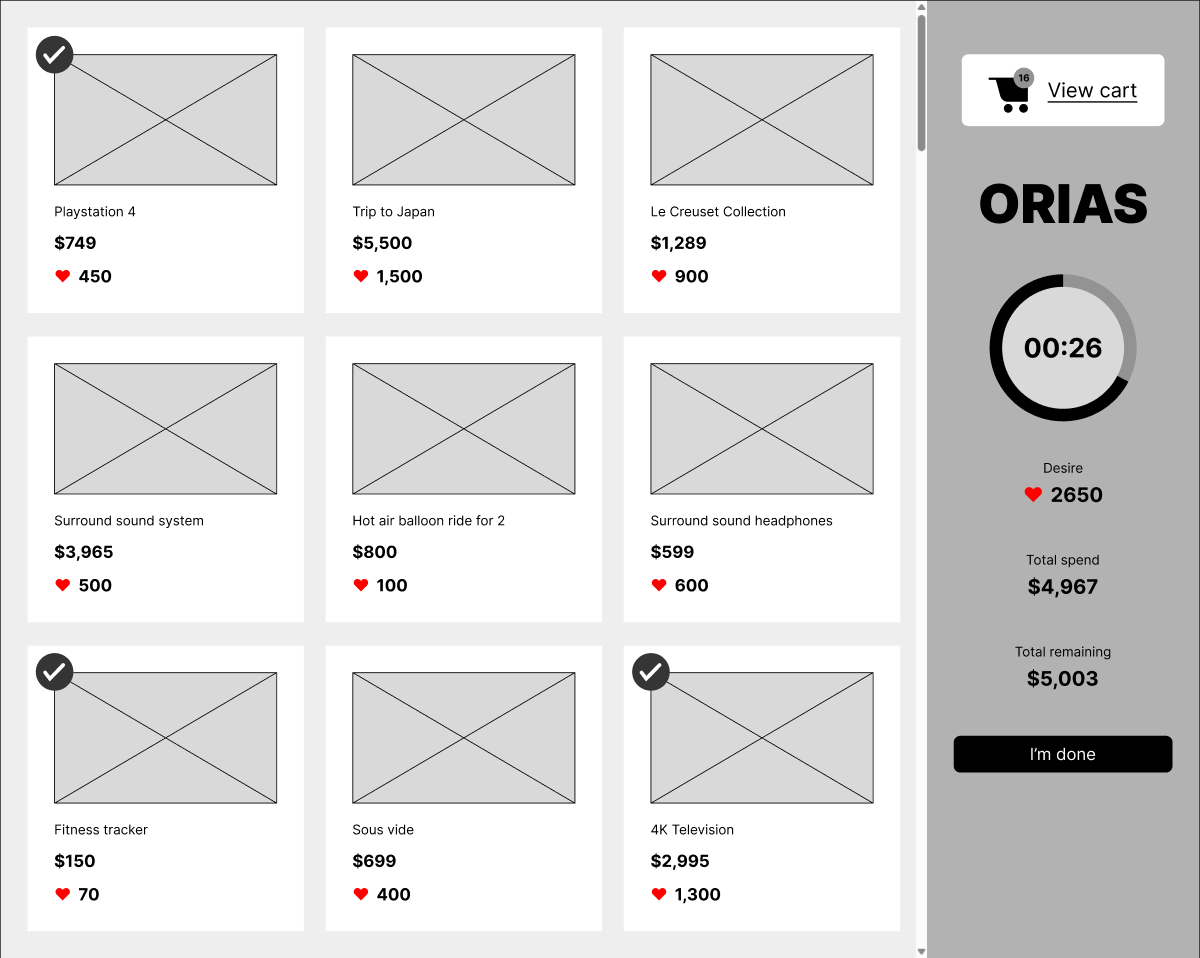
Within a day I produced a fully functioning shopping-spree prototype complete with:
A browsable prize list
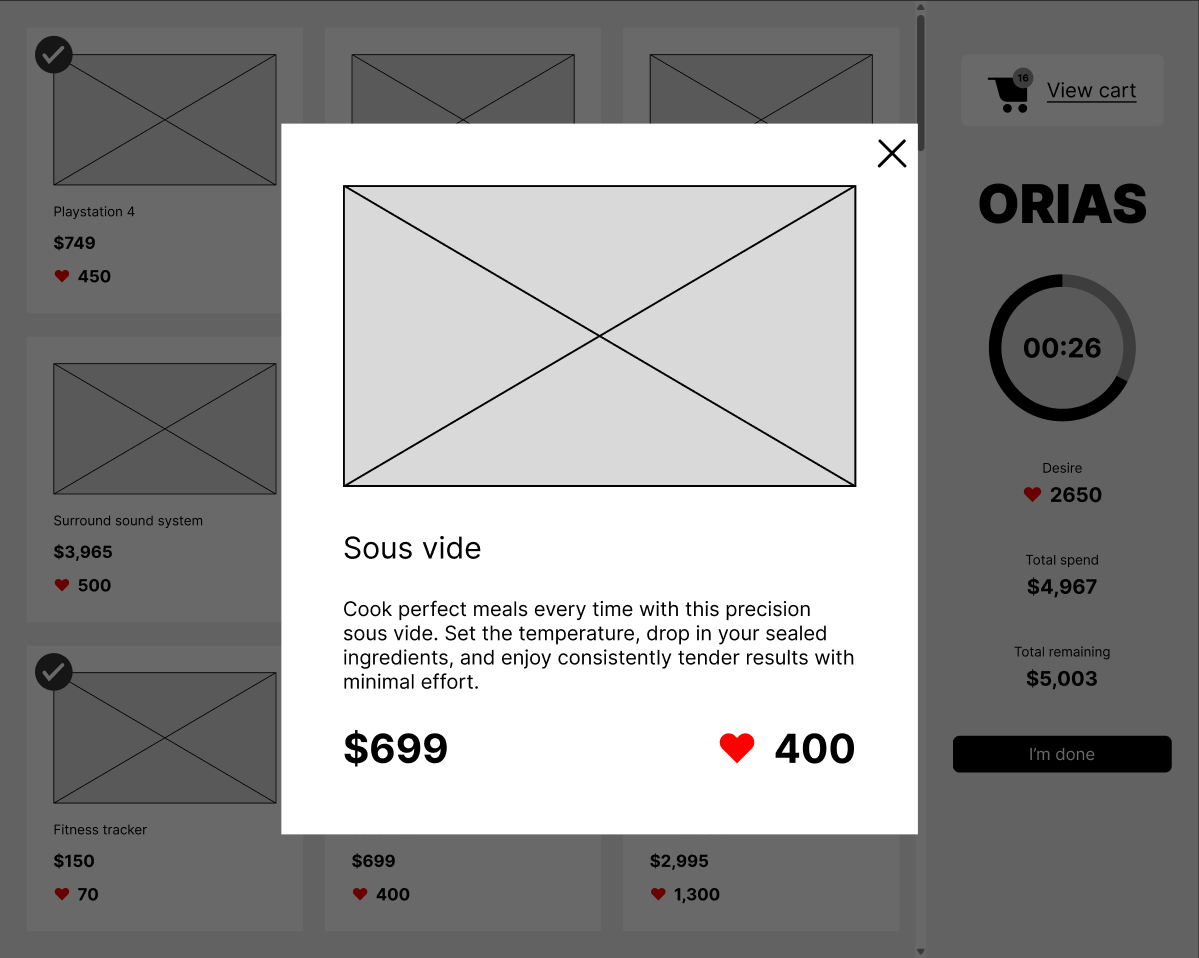
Item detail modals
Cart logic with value limits
A countdown timer
A working 10,000 dollar spend cap
The goal was to replicate the mechanics of the final build closely enough that testing feedback would be meaningful.
Ensuring behaviour reflected real-world decision-making
A standard usability session would not tell us what we needed to know. Participants could easily hit the $10,000 target in 60 seconds by simply adding random items. The actual winner, however, would behave very differently: they would carefully choose what they personally wanted.
To replicate this real-world mindset, I introduced a feature that broadly emulates the way a person's interest in specific products is not necessarily linked to price—a 'desire' score assigned to each product. This score was independent of product price, with some high-priced options showing low desire scores and vice versa.
To test the prototype, we provided a small cash prize to team members who were not involved in the project. The prize would be awarded to the person who got the highest combined value of total prize value and total desire value.
This approach prevented our testers from randomly adding products and demanded deeper consideration of which products they selected.
Adding a touch of friction
Early tests showed that even with desire-based decision-making, hitting the $10,000 mark was slightly too easy. To fine-tune difficulty, I revised the prototype:
The “add to cart” action was moved into a modal for each prize rather than appearing in the prize list view.
This change introduced a deliberate extra interaction, adding friction while still feeling natural.
To prevent this extra click feeling like needless busywork, we added prize information to the modal.
The updated flow was tested again, and the results were exactly what we were aiming for: everyone could hit the target, but only with focus and quick decision-making.
The result
Before announcing the official winner, we released a public “practice” version of the game across social media. This created immediate momentum, with people sharing their scores and posting their dream prize lists. The practice experience became a powerful engagement engine in its own right, building anticipation and broadening awareness of the competition long before voting closed.
This surge in organic interest translated directly into the outcomes Australia Post was aiming for:
Consumer votes increased by 60 per cent, outperforming the target by 31 per cent.
Merchant registrations rose by 42 per cent compared with the previous year.
Alongside the game experience, we also introduced a refreshed email strategy and digital promotional tools to help retailers mobilise their customer base, further strengthening the campaign’s impact.
Our winner
The final event delivered a wonderfully shareable moment thanks to a full filming setup and a live host. The winner’s energy captured the spirit of the promotion, reinforcing the emotional payoff of our redesigned experience.